Product information
€33.00
Stock: In Stock Online
Our USPs

- Free DeliveryExtended Range: Delivery 3-4 working days

- Dubray RewardsEarn 132 Reward Points on this title
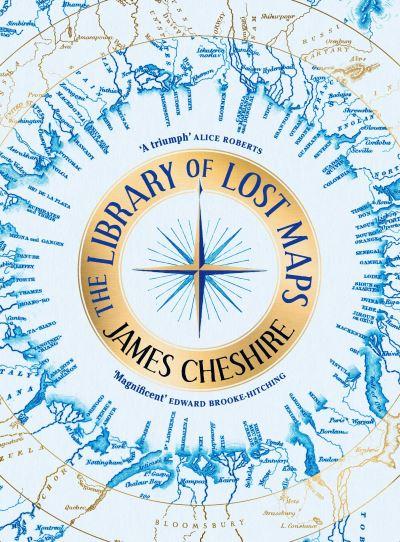
The Library of Lost Maps
Product information
Author:
Type: Hardback
ISBN: 9781526676610
Date: 9th October, 2025
Publisher: Bloomsbury
Categories
- Historical Maps And Atlases
Description
'A magnificent book that sings of the romance and mystery that only old maps possess' EDWARD BROOKE-HITCHING 'Astonishingly fresh and insightful ... A triumph' ALICE ROBERTS 'Engaging, deeply satisfying and elegantly designed' SIMON WINCHESTER, SPECTATOR The remarkable story of an overlooked map archive that reveals how maps have helped inspire some of the greatest scientific discoveries, but also led to terrible atrocities. At the heart of University College London, nestled in the centre of Bloomsbury, lies a long-forgotten map library packed with thousands of maps and atlases. After Professor James Cheshire stumbled upon it, he spent three years sifting through hundreds of dusty drawers to see what was there. He was stunned to uncover some of the most significant maps and atlases from the last two centuries - many of which had not seen the light of day for decades. In The Library of Lost Maps we discover atlases for the masses that expanded nineteenth-century horizons and maps that were wielded by those in power to wage war and negotiate peace; charts that trace the icy peaks of the Himalayas and the deepest depths of the ocean; and pioneering maps produced to settle borders in central Europe or the wealth of those in inner-city London. Maps have played a vital role in shaping our scientific knowledge of the world, showing the impact of climate change and inspiring the theory of plate tectonics. They have also guided politicians, encouraging both beneficial reforms and horrific conquests, the consequences of which we continue to live with today. Brimming with astonishing discoveries, The Library of Lost Maps reveals why cartography really matters and how map-making has helped transform our understanding of the world around us.