Product information
€98.60
Stock: Out of Stock
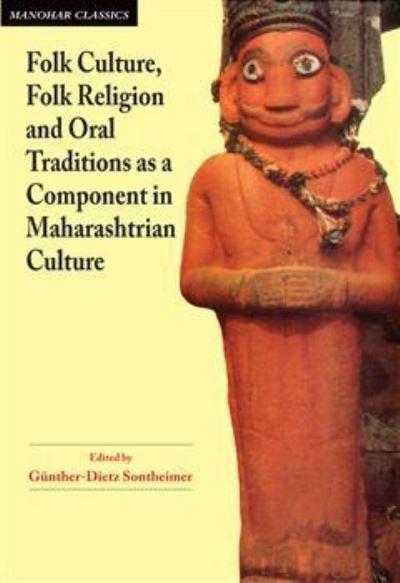
Folk Culture, Folk Religion and Oral Traditions As a Component in Maharashtrian Culture
Product information
Author:
Type: Hardback
ISBN: 9788173040870
Date: 15th June, 2025
Publisher: Manohar
Description
The subjects of the papers in this volume range from the early phases of human culture in Maharashtra as evidenced by archaeological findings at Daimabad and Inamgaon (Dhavlikar) to the rise of the yaksa Khanderav to the tutelary god of the Satavahanas, the rulers of the Deccan in the early years of the first millennium, AD (Deshpande). Recurrent themes in Indian folk-lore, such as the traditions about cows, bulls, buffaloes, and bears are surveyed by Durga Bhagwat who sees compositeness as the very essence of folk, that is, Indian culture. The close description of living folk traditions of great antiquity in the Marathvada region of Maharashtra forms the subject of P.B. Mande's impressive ethnographic contribution. R.C. Dhere shows how folk etymologies, though often incorrect historically, infuse sacred places with religious significance, while the saints make creative use of etymologies current among the people to concretize abstract or universal spiritual doctrines. James W. Laine examines heroic ballads about Sivaji, povadas, showing the inherent tensions between the ideals of the warrior-sacrificer and brahmanical notions of the ideal Hindu king as an ascetic-renouncer.While Dilip Chitre brings Patthe Bapurav back on stage to show how one of the first songs of social criticism in Marathi has its roots in the lavni, a folk genre of Maharashtra, N.K. Wagle involves us in endless litigations concerning the sending of troublesome spirits (bhuts) in 18th century Maharashtra, tongue very much in cheek. In a more serious vein, Eleanor Zelliot highlights the consciously anti-Hindu 'folk-lore of pride' written by the Buddhist followers of Dr. B.R. Ambedkar. In a similar context, Traude Pillai-Vetschera chronicles the struggle of Mahar converts to Christianity to come to terms with the painful injustices of the past and find the human dignity they deserve amidst the often equally painful injustices of the present. While E. Reenberg Sand selects aspects of the history of the sacred places along the riverbanks near Pandharpur to demonstrate the inter-relatedness of folk and bhakti traditions, Anne Feldhaus draws us into the whirl-pool of her research on different types of river goddesses showing the inter-relationships of water, fertility, females, difficulties in childblearing, and the danger of the di owning of children if river goddesses are not propitiated. Most appropriately, Gunther Sontheimer chose the pilgrimage-festival of god Khandoba as the theme of his own contribution. 'The folk festival in (jatra) in the religious tradition of Maharashtra' is, in a way, the hub of this volume into which the majority of its papers neatly fit, not unlike jewelled spokes in the wheel of a magnificent temple-chariot....