Product information
€224.75
Stock: In Stock Online
Our USPs

- Free DeliveryExtended Range: Delivery 3-4 working days

- Dubray RewardsEarn 899 Reward Points on this title
The Belgian Congo As Developmental State
Product information
Author:
Type: Hardback
ISBN: 9781032254302
Date: 31st August, 2022
Publisher: Routledge
Description
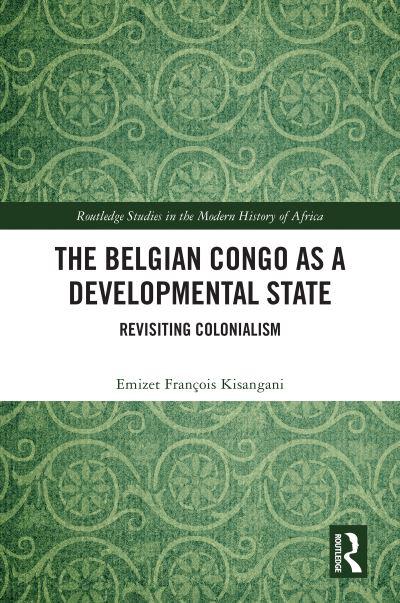
This book challenges assumptions that poor post-colonial economic performance is always a direct product of colonialism by reconsidering the Belgian Congo (1908-1959) as a developmental state.The book demonstrates that despite the colonial system's economic exploitation and extraction, brutality, excessive taxation, and inequities, the Belgian Congo achieved successes in developing the economy in a short period of time. The Belgian Congo was able to achieve this by investing its higher rates of fiscal revenue in political stability, physical infrastructure, education, and healthcare. By reconsidering the Belgian colonial state as a developmental state, this book encourages scholars to adopt a more nuanced analysis of African history. Considering state capacity and state autonomy as key features of a developmental state, the book demonstrates that colonial state managers in the Belgian Congo were able to supply these public goods that sustained economic growth for decades. Whilst by no means glorifying colonialism or the atrocities that were conducted during the Belgian occupation, the book nonetheless outlines how different forms of capitalism were deployed to further economic development in the country. In contrast, predatory state managers of the Congo Free State (1885-1908) and post-colonial kleptocrats (1960-2018) have squandered Congo's natural resources with disastrous economic and social consequences.Contrasting the Belgian Congo with colonies of settlement and other colonies of extraction, this book encourages researchers and students to reconsider the dominant narratives within colonial history, development, and African Studies.