Product information
€55.95
Stock: In Stock Online
Our USPs

- Free DeliveryReduced delivery schedule until 5th Jan

- Dubray RewardsEarn 224 Reward Points on this title
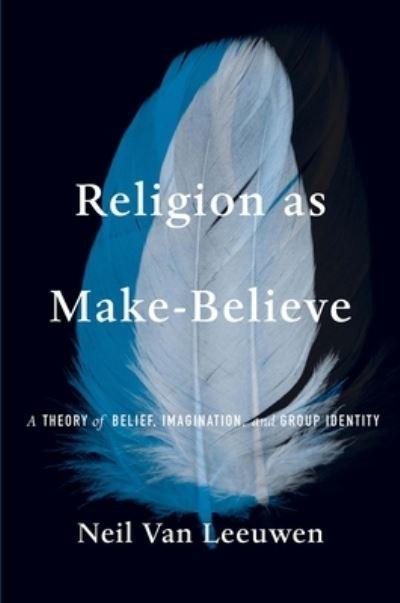
Religion As Make-Believe
Product information
Author:
Type: Hardback
ISBN: 9780674290334
Date: 15th December, 2023
Publisher: Harvard University Press
Description
To understand the nature of religious belief, we must look at how our minds process the world of imagination and make-believe. We often assume that religious beliefs are no different in kind from ordinary factual beliefs-that believing in the existence of God or of supernatural entities that hear our prayers is akin to believing that May comes before June. Neil Van Leeuwen shows that, in fact, these two forms of belief are strikingly different. Our brains do not process religious beliefs like they do beliefs concerning mundane reality; instead, empirical findings show that religious beliefs function like the imaginings that guide make-believe play. Van Leeuwen argues that religious belief-which he terms religious "credence"-is best understood as a form of imagination that people use to define the identity of their group and express the values they hold sacred. When a person pretends, they navigate the world by consulting two maps: the first represents mundane reality, and the second superimposes the features of the imagined world atop the first. Drawing on psychological, linguistic, and anthropological evidence, Van Leeuwen posits that religious communities operate in much the same way, consulting a factual-belief map that represents ordinary objects and events and a religious-credence map that accords these objects and events imagined sacred and supernatural significance. It is hardly controversial to suggest that religion has a social function, but Religion as Make-Believe breaks new ground by theorizing the underlying cognitive mechanisms. Once we recognize that our minds process factual and religious beliefs in fundamentally different ways, we can gain deeper understanding of the complex individual and group psychology of religious faith.