Product information
€56.54
Stock: In Stock Online
Our USPs

- Free DeliveryExtended Range: Delivery 3-4 working days

- Dubray RewardsEarn 226 Reward Points on this title
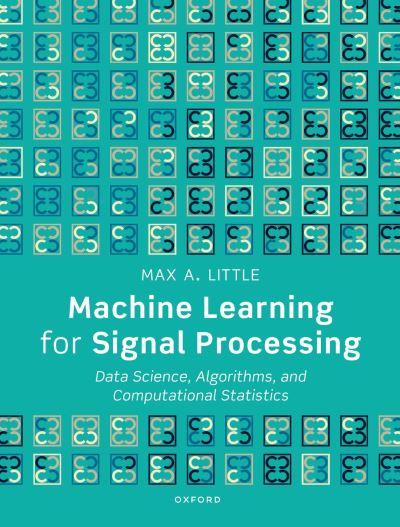
Machine Learning For Signal Processing
Product information
Author:
Type: Paperback
ISBN: 9780198896555
Date: 28th February, 2024
Publisher: Oxford University Press
Description
This book describes in detail the fundamental mathematics and algorithms of machine learning (an example of artificial intelligence) and signal processing, two of the most important and exciting technologies in the modern information economy. Taking a gradual approach, it builds up concepts in a solid, step-by-step fashion so that the ideas and algorithms can be implemented in practical software applications.
Digital signal processing (DSP) is one of the 'foundational' engineering topics of the modern world, without which technologies such the mobile phone, television, CD and MP3 players, WiFi and radar, would not be possible. A relative newcomer by comparison, statistical machine learning is the theoretical backbone of exciting technologies such as automatic techniques for car registration plate recognition, speech recognition, stock market prediction, defect detection on assembly lines, robot guidance, and autonomous car navigation. Statistical machine learning exploits the analogy between intelligent information processing in biological brains and sophisticated statistical modelling and inference.
DSP and statistical machine learning are of such wide importance to the knowledge economy that both have undergone rapid changes and seen radical improvements in scope and applicability. Both make use of key topics in applied mathematics such as probability and statistics, algebra, calculus, graphs and networks. Intimate formal links between the two subjects exist and because of this many overlaps exist between the two subjects that can be exploited to produce new DSP tools of surprising utility, highly suited to the contemporary world of pervasive digital sensors and high-powered, yet cheap, computing hardware. This book gives a solid mathematical foundation to, and details the key concepts and algorithms in this important topic.