Product information
€11.59
Stock: In Stock Online
Our USPs

- Free DeliveryExtended Range: Delivery 3-4 working days

- Dubray RewardsEarn 46 Reward Points on this title
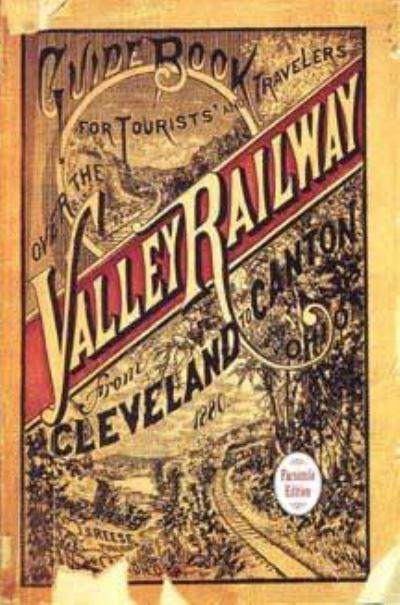
Guide Book For the Tourist and Traveler Over the Valley Railway
Product information
Author:
Type: Paperback
ISBN: 9780873387354
Date: 25th September, 2002
Publisher: Kent State University Press
Description
Founded in 1871 by a group of entrepreneurs from Cleveland, Akron, and Canton, the Valley Railway paralleled the Cuyahoga River Valley, stretching from southeast Cleveland to Akron and then on to Canton and Valley Junction in Tuscarawas County. The Railway filled a need in the region by providing an important passenger rail link among the three cities and provided direct access to the coal fields in Stark and Tuscarawas Counties, supplying coal for Cleveland's iron mills and other growing industries. The Railway began operation in 1880, continued service until 1962, and was revived in the early 1970s. Construction of the Valley Railway coincided with a growing interest in travel and tourism in the United States. It was in the spirit of tourism and boosterism that John Reese wrote his Guide, which is the only primary-source account of the landscape and communities of the region in 1880. Reese discusses both the built environment - bridges, viaducts, trestles, and roadbeds - and natural features in plain view from the train and illustrates it all with thirty period engravings. In addition, the Guide is filled with advertisements for all sorts of tradesmen, merchants, and businesses then found along the line, providing an added degree of interest - and amusement - for modern readers. In their new Introduction, historians Sam Tamburro and Juliet Galonska provide a corporate history of the Valley Railway, a thorough examination of the impact of the Railway on the rural communities through which it passed, and a discussion of the brief but vital role it played in tying together the regional ""metropolitan corridor"" of Cleveland, Akron, and Canton, all complemented with photographs of the region today.