Product information
€88.90
Stock: In Stock Online
Our USPs

- Free DeliveryExtended Range: Delivery 3-4 working days

- Dubray RewardsEarn 356 Reward Points on this title
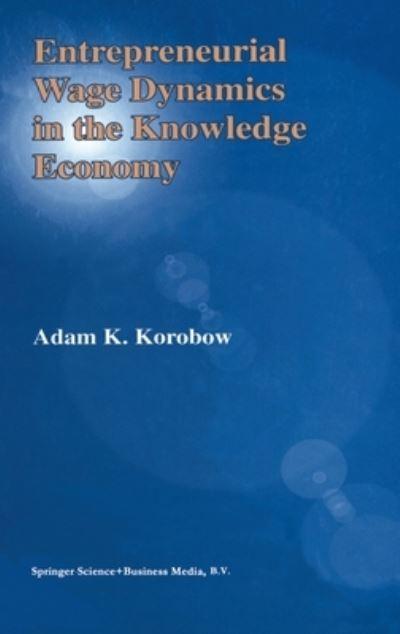
Entrepreneurial Wage Dynamics in the Knowledge Economy
Product information
Author:
Type: Hardback
ISBN: 9781402072451
Date: 31st October, 2002
Publisher: Springer
Categories
- Labour
- Development
- Entrepreneurship
Description
This book challenges the conclusions that link entrepreneurship to lower employee compensation. This challenge is based on more recent theories of entrepreneurship, which view the role of small firms as existing in a dynamic context rather than a static framework. The evolutionary theory of entrepreneurship views the startup as an endogenous response to economic knowledge and suggests that new firms are a diverse manifestation of the search process. Evolutionary theory has been strikingly silent about how employee compensation might differ in an evolutionary framework compared to a static one. This is important because employee compensation is a key measure of economic performance, complementing other measures such as growth and survival. This book argues that the link between entrepreneurship and wages is different in an evolutionary context than in the traditional static analysis, suggesting that, particularly in knowledge-based industries, firms will pay relatively lower levels of employee compensation subsequent to startup. If the firm learns that it is viable, and survives and grows, levels of employee compensation will rapidly rise. This research provides compelling empirical evidence suggesting that the relationship between firm age and employee compensation is very different in an evolutionary context than in a static analysis. While this study confirms that new and small enterprises compensate employees at lower levels than do their larger counterparts subsequent to startup, over time, the levels of employee compensation not only increase, but also at a higher rate than in larger enterprises. While the traditional static analysis leads to the policy prescription that new firms and the low wages associated with them represent a drag on economic welfare, the evolutionary view suggests that, in the knowledge economy, they are an essential component of the search for steep trajectories, both in terms of growth and wages.