Product information
€36.25
Stock: In Stock Online
Our USPs

- Free DeliveryReduced delivery schedule until 5th Jan

- Dubray RewardsEarn 145 Reward Points on this title
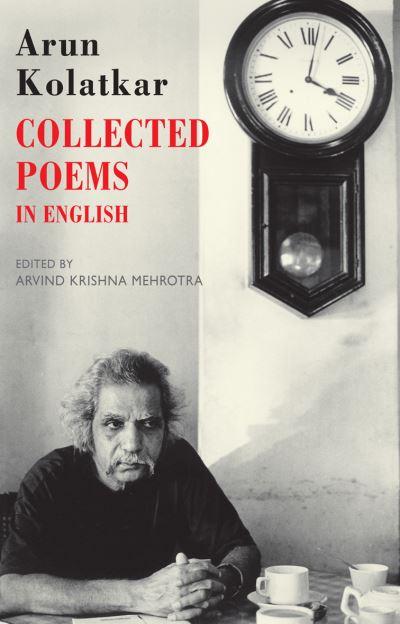
Collected Poems in English
Product information
Author:
Type: Paperback
ISBN: 9781852248536
Date: 25th November, 2010
Publisher: Bloodaxe Books
Categories
- Individual Poets
Description
Arun Kolatkar (1931-2004) was one of India's greatest modern poets. He wrote prolifically, in both Marathi and English, publishing in magazines and anthologies from 1955, but did not bring out a book of poems until he was 44. "Jejuri" (1976) won him the Commonwealth Poetry Prize. His third Marathi publication, Bhijki Vahi, won a Sahitya Akademi Award in 2004. Always hesitant about publishing his work, Kolatkar waited until 2004, when he knew he was dying from cancer, before bringing out two further books, "Kala Ghoda Poems" and "Sarpa Satra". A posthumous selection, "The Boatride and Other Poems" (2008), edited by Arvind Krishna Mehrotra, contained his previous uncollected English poems as well as translations of his Marathi poems; among the book's surprises were his translations of bhakti poetry, song lyrics, and a long love poem, the only one he wrote, cleverly disguised as light verse. This first Collected Poems in English brings together work from all those volumes. "Jejuri" offers a rich description of India while at the same time performing a complex act of devotion, discovering the divine trace in a degenerate world. Salman Rushdie called it 'sprightly, clear-sighted, deeply felt - a modern classic'. For Arvind Krishna Mehrotra, it was 'among the finest single poems written in India in the last forty years - it surprises by revealing the familiar, the hidden that is always before us'. Jeet Thayil attributed its popularity in India to 'the Kolatkarean voice: unhurried, lit with whimsy, unpretentious even when making learned literary or mythological allusions. And whatever the poet's eye alights on - particularly the odd, the misshapen, and the famished - receives the gift of close attention.'