Product information
€31.34
Stock: In Stock Online
Our USPs

- Free DeliveryExtended Range: Delivery 3-4 working days

- Dubray RewardsEarn 125 Reward Points on this title
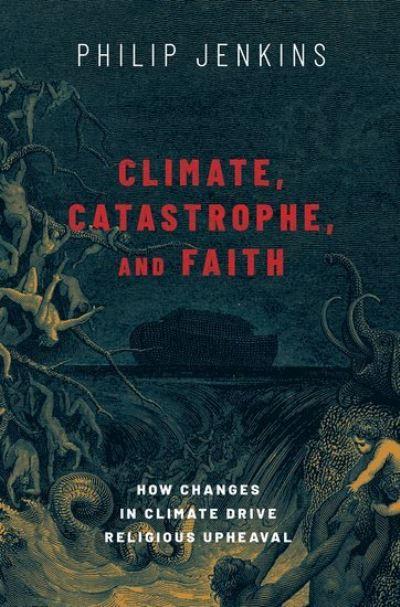
Climate, Catastrophe, and Faith
Product information
Author:
Type: Hardback
ISBN: 9780197506219
Date: 23rd September, 2021
Publisher: Oxford University Press
Description
One of the world's leading scholars of religious trends shows how climate change has driven dramatic religious upheavals.
Long before the current era of man-made climate change, the world has suffered repeated, severe climate-driven shocks. These shocks have resulted in famine, disease, violence, social upheaval, and mass migration. But these shocks were also religious events. Dramatic shifts in climate have often been understood in religious terms by the people who experienced them. They were described in the language of apocalypse, millennium, and Judgment. Often, too, the eras in which these shocks occurred have been marked by far-reaching changes in the nature of religion and spirituality. Those changes have varied widely - from growing religious fervor and commitment; to the stirring of mystical and apocalyptic expectations; to waves of religious scapegoating and persecution; or the spawning of new religious movements and revivals. In many cases, such responses have had lasting impacts, fundamentally reshaping particular religious traditions.
In Climate, Catastrophe, and Faith historian Philip Jenkins draws out the complex relationship between religion and climate change. He asserts that the religious movements and ideas that emerge from climate shocks often last for many decades, and even become a familiar part of the religious landscape, even though their origins in particular moments of crisis may be increasingly consigned to remote memory. By stirring conflicts and provoking persecutions that defined themselves in religious terms, changes in climate have redrawn the world's religious maps, and created the global concentrations of believers as we know them today.
This bold new argument will change the way we think about the history of religion, regardless of tradition. And it will demonstrate how our growing climate crisis will likely have a comparable religious impact across the Global South.