Product information
€66.70
Stock: In Stock Online
Our USPs

- Free DeliveryExtended Range: Delivery 3-4 working days

- Dubray RewardsEarn 267 Reward Points on this title
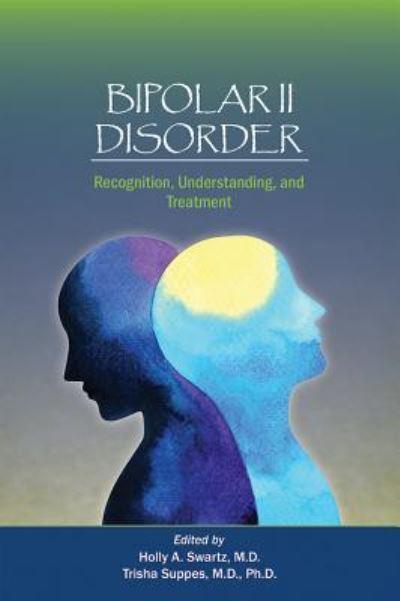
Bipolar II Disorder
Product information
Author:
Type: Paperback
ISBN: 9781615371785
Date: 30th May, 2019
Publisher: American Psychiatric Association Publishing
Categories
- Psychiatry
Description
Unlike its cousin, bipolar I disorder, which has been extensively studied and
depicted in popular literature and on screen, bipolar II disorder is poorly
understood, underdiagnosed, and insufficiently treated. Bipolar II Disorder:
Recognition, Understanding, and Treatment is the only text on the market that
examines every aspect of the disorder in an up-to-date, rigorous, and clinically
oriented manner. The editors, experts on the diagnosis and treatment of this
neglected illness, have gathered a group of contributors who together advance
the reader's knowledge of the disease in a systematic, accessible way,
identifying and addressing the challenges of diagnosis and treatment and
exploring current thinking on the biological determinants of the disorder.
Acknowledging potential pitfalls of differential diagnosis, the book examines
psychiatric comorbidities that most typically co-occur with bipolar II, such as
anxiety disorders, impulse-control disorders, and borderline personality
disorder. Next, the book focuses on the growing body of evidence that suggests
that the underlying biology of bipolar II is distinct from that of other mood
disorders and discusses the increasingly important role that neuroimaging plays
in the diagnosis and understanding of bipolar II disorder as research
progresses. Finally, the text explores how to manage bipolar II disorder,
providing an up-to-date review of medication options and psychosocial
treatments.
The book's strengths are many and compelling: Individual
chapters are written by experts in the fields of phenomenology, genetics,
neuroimaging, psychopharmacology, psychotherapy, child psychiatry, and
reproductive mental health who review what is currently known about bipolar II
disorder and its management. A special chapter on suicide describes a framework
for understanding risk and a clinical model for conducting suicide risk
assessment specific to individuals with bipolar II disorder. The chapter
underscores factors associated with increased risk in bipolar II disorder and
identifies strategies to mitigate that risk. Written for a professional
audience, the book may also be of interest to patients who want to learn more
about their own diagnosis and to those who wish to support them. Fascinating
case vignettes and concise key points are provided throughout the text, helping
readers to understand and contextualize the most important information in each
chapter for easy reference and review. Although advances have been made in
understanding bipolar II disorder since the diagnosis was first codified in
1994, many gaps remain in the evidence base, particularly related to optimal
treatments and neurobiology, and the book examines future directions for
inquiry.
For years, clinicians had little guidance for diagnosing and
treating bipolar II disorder, relying on treatment options for bipolar I
disorder, which were inadequate and of limited efficacy. Bipolar II Disorder:
Recognition, Understanding, and Treatment responds to these frustrations with
evidence-based, substantive, and up-to-the-minute information, demystifying the
disorder and equipping the reader to provide the highest standard of care.