Product information
€9.43
Stock: In Stock Online
Our USPs

- Free DeliveryExtended Range: Delivery 3-4 working days

- Dubray RewardsEarn 38 Reward Points on this title
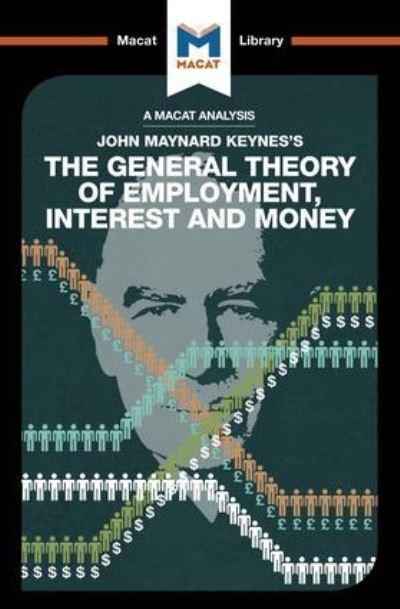
An Analysis of John Maynard Keyne's The General Theory of Employment, Interest and Money
Product information
Author:
Type: Paperback
ISBN: 9781912127900
Date: 4th July, 2017
Publisher: Routledge
Categories
- Literary Theory
- Psychology
- Learning Skills
Description
John Maynard Keynes's 1936 General Theory of Employment, Interest and Money is a perfect example of the global power of critical thinking. A radical reconsideration of some of the founding principles and accepted axioms of classical economics at the time, it provoked a revolution in economic thought and government economic policies across the world. Unsurprisingly, Keynes's closely argued refutation of the then accepted grounds of economics employs all the key critical thinking skills: analysing and evaluating the old theories and their weaknesses; interpreting and clarifying his own fundamental terms and ideas; problem solving; and using creative thinking to go beyond the old economic theories. Perhaps above all, however, the General Theory is a masterclass in problem solving. Good problem solvers identify their problem, offer a methodology for solving it, and suggest solutions. For Keynes the problem was both real and theoretical: unemployment. A major issue for governments during the Great Depression, unemployment was also a problem for classical economics. In classical economics, theoretically, unemployment would always disappear. Keynes offered both an explanation of why this was not the case in practice, and a range of solutions that could be implemented through government monetary policy.