Product information
€81.20
Stock: Out of Stock
Aggression
Product information
Author:
Type: Paperback
ISBN: 9781615371532
Date: 30th December, 2018
Publisher: American Psychiatric Association Publishing
Categories
- Psychiatry
Description
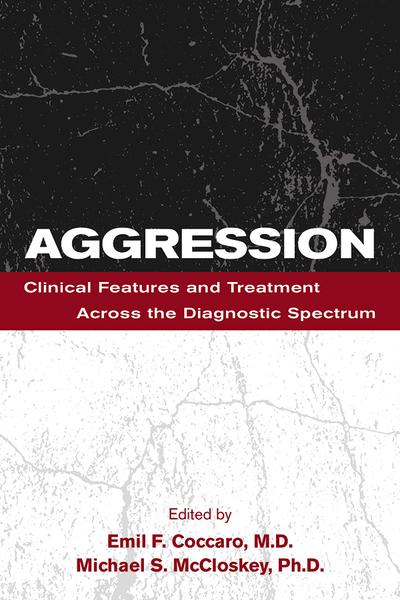
Aggression: Clinical Features and Treatment Across the Diagnostic Spectrum
addresses the role aggression plays in intermittent explosive disorder (IED),
referred to as "primary aggression," and in a host of other psychiatric
disorders-from autism to posttraumatic stress. Aggression is a well-studied,
multidimensional phenomenon that may be parsed by cognition, affect, and
behavior. Occurring as primary aggression and as a symptom of other psychiatric
disorders, aggression is both common and destructive-of property, relationships,
and the social order. The editors were instrumental in the development of the
DSM classification for IED, and the book discusses the evolution of the
diagnostic criteria from the 1950s to the current DSM-5. This long-range
perspective informs the volume and provides a firm foundation for the clinical
content, which is case-based and accessible. Moreover, each chapter is
consistent in structure, moving from phenomenology to psychobiology to clinical
approach and treatment. The book emphasizes that although abnormal
psychobiological systems, including neurochemistry and neural circuits, may
increase the risk of behavioral aggression, influences associated with genetics,
epigenetics, and environmental forces are also extremely important, and these
are discussed in-depth in each chapter.
Chapter topics were selected for
their clinical relevance: Two chapters are devoted to primary aggression,
first distinguishing form (verbal and physical) and type (direct or indirect);
next, delineating the phenomenology, psychobiology, and comorbidities; and then
exploring current treatment options, both psychopharmacological and
psychotherapeutic. Because aggression represents the most common reason for
referral to psychiatric care in youth, most frequently in the context of
disruptive behavioral disorders, including attention-deficit/hyperactivity
disorder, the book devotes a chapter to these disorders, emphasizing prevention,
assessment, and treatment (e.g., self-regulation, skill-building, improved
support systems, and medication). Aggression and anger may play a role in the
onset and maintenance of eating disorders, complicating clinical presentation
and influencing prognosis and treatment. The chapter on eating disorders
addresses aggression, both self- and other-directed, and provides measures with
sound psychometric properties for assessing eating disorder psychopathology and
aggression. The chapter on anxiety disorders highlights the prevalence of
aggression, hostility, irritability, and anger in patients with these disorders,
noting that these individuals may be at increased risk due to genetic
sensitivity to stress. The role of aggression in social anxiety disorder, panic
disorder, and generalized anxiety disorder is explored in-depth, and current
treatment recommendations are discussed. In addition to carefully chosen
clinical vignettes, the book employs chapter-ending summaries and key clinical
points and is replete with tables presenting information such as rating scales
and summaries of pharmacological management.
Cogent, compelling, and
clinically rich, Aggression: Clinical Features and Treatment Across the
Diagnostic Spectrum examines aggression in its myriad forms and manifestations
while offering cutting-edge guidance on assessment and treatment.